Disclosure: As an Amazon Associate, I earn from qualifying purchases.
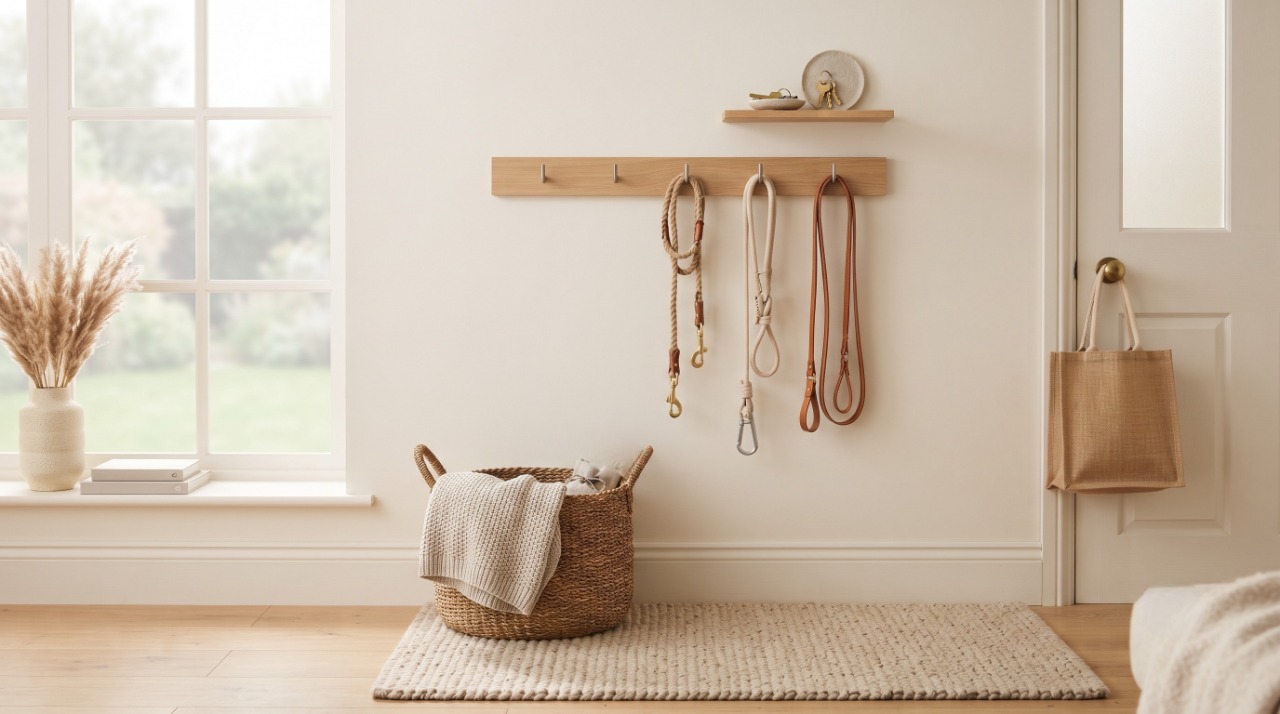
Look at the space just inside your front door. If you have a dog, I can probably guess what’s there: a leash draped over a radiator or dumped on the floor, a half-empty bag of treats, poo bags in a coat pocket somewhere, a towel that’s been on the same hook since the last rainy walk, and a rug that’s a slightly different colour than it used to be.
None of that is a storage problem exactly. It’s a sequencing problem — the things you need for a walk and the things you need after a walk are scattered across three rooms, so they end up living wherever you last put them down.
A dog station fixes it by putting the whole sequence in one place. Here’s how I’d build one, what goes in it, and what it costs.
The logic: build around the sequence, not the stuff
Most “dog station” posts are just a list of storage bins. That misses the point. What makes the difference is arranging it in the order you actually use it.
Going out: leash → poo bags → treats
Coming in: paws → towel → leash back on hook
If you set it up in that order — left to right, or top to bottom — you stop thinking about it. Everything is where your hand already is. If you don’t, you’ve just moved the mess into a nicer basket.
Three practical constraints worth knowing before you buy anything:
Height matters more than you’d expect. Hooks want to be at about shoulder height for you and out of reach for the dog. Too low and a bored dog will help themselves to a leash. Too high and you won’t use it when your hands are full.
Leave the floor clear. Wall-mounted beats floor-standing in an entryway, always. Floor space in a hallway is the most contested space in a house, and anything sitting on it becomes something to step around.
The dirty zone and the clean zone need separating. Paw-cleaning and towels live at the bottom. Food and treats live at the top. This sounds fussy until the first time you knock a wet towel into an open treat container.
What goes in it
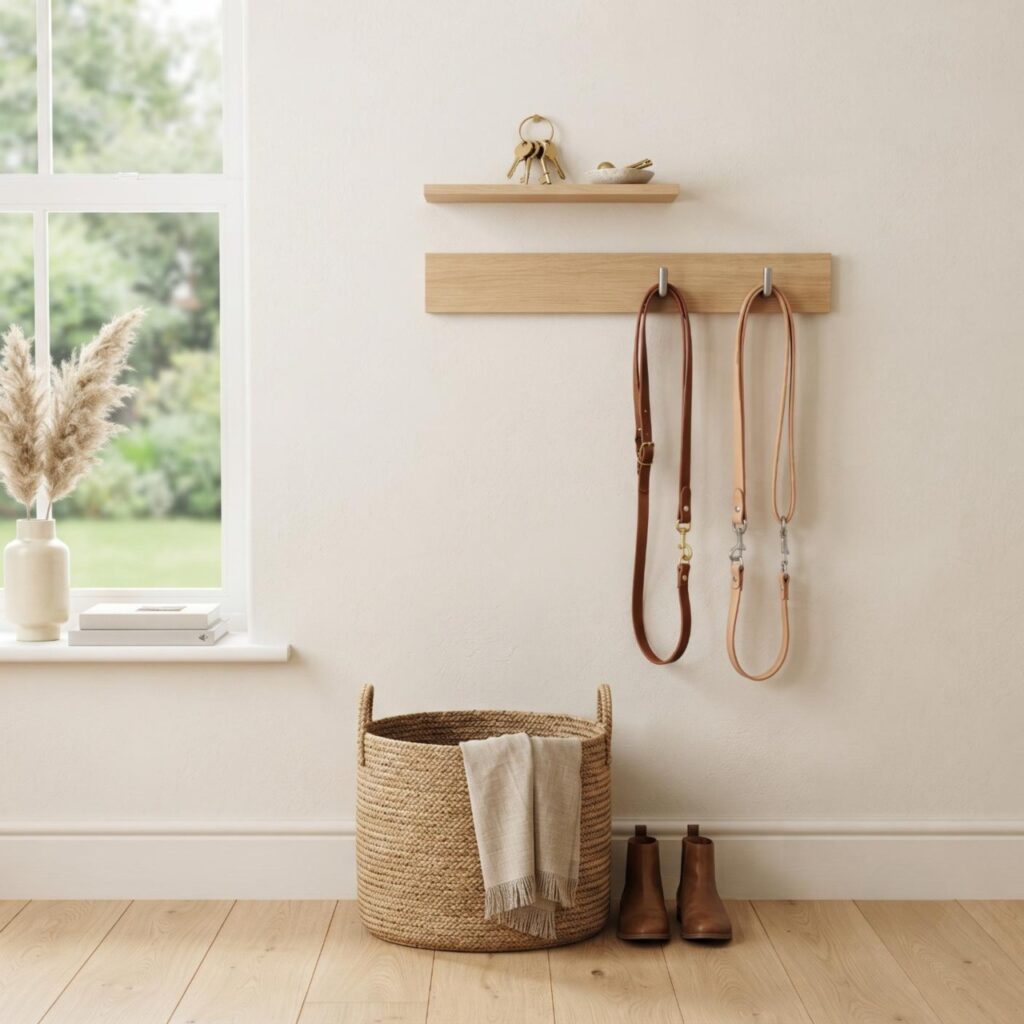
1. A wall-mounted leash holder
The anchor of the whole thing. A rail with three or four hooks holds leashes, harnesses, a spare lead, and a tote bag, all off the floor and all visible.
Look for one with a small shelf or tray on top if you can — that’s where keys, poo bag rolls, and a torch end up living, which keeps them out of your coat pockets.
Mount it at your shoulder height, not eye height. You’ll be reaching for it while holding a dog.
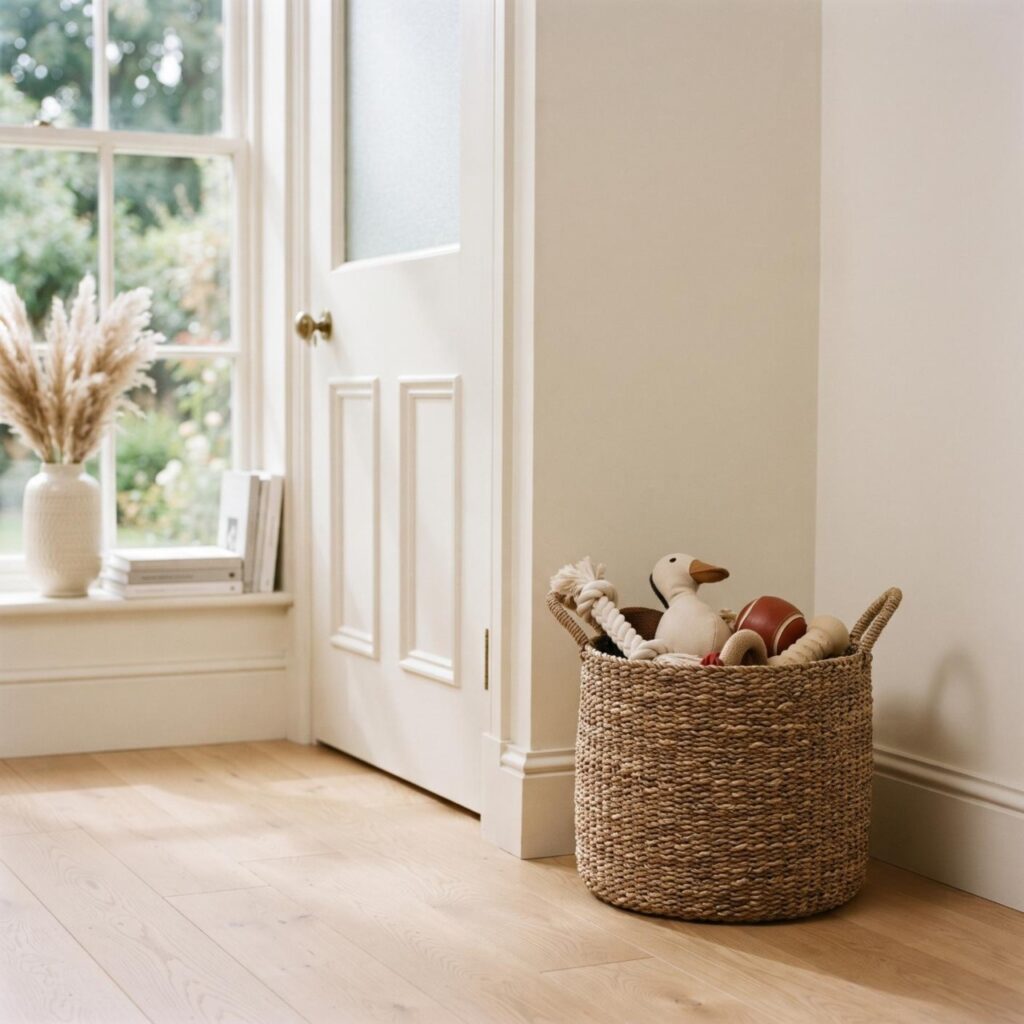
2. A basket for toys
Toys migrate. They start in the living room, end up under the sofa, and you find them with your foot at midnight. A basket by the door gives them one destination — and if you make a habit of dropping them in on the way past, the rest of the house stays clearer.
Seagrass or woven baskets look like furniture rather than pet storage, which matters if your entryway is visible from your living room. Get one deeper than you think you need; toys expand to fill available space.
3. An airtight food container
If your dog’s food is currently in the original bag with the top rolled over, this is the highest-impact swap on the list — and not just for tidiness.
Kibble goes stale once air gets to it, and the fats in it oxidise, which is why food from the bottom of an old bag smells different and fussy dogs start refusing it. An airtight seal keeps it edible to the last scoop. It also keeps out pantry moths, which are a nightmare to get rid of once established.
Measure the container against your usual bag size before buying. A 30 lb bag needs a bigger container than the photos suggest.
4. A paw cleaner cup
The single item that changes your floors the most.
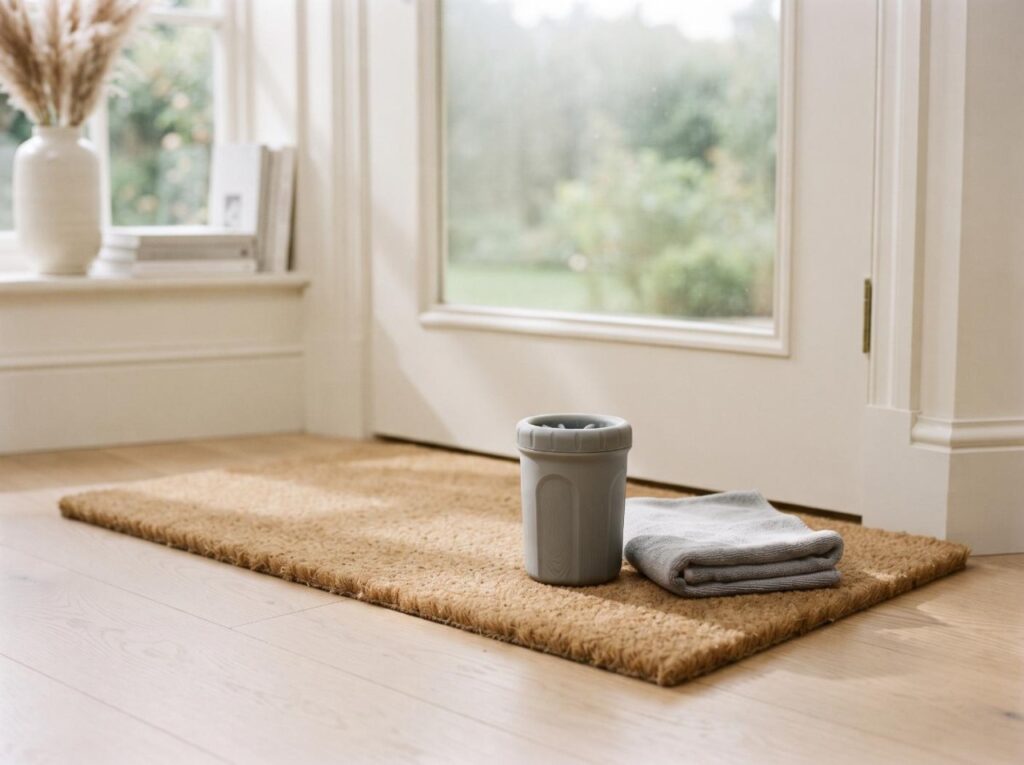
It’s a cup with soft silicone bristles inside. Add a little water, dip each paw, twist, wipe with the towel. Takes about twenty seconds for all four and removes the mud that would otherwise end up on your hallway, then your rug, then your sofa.
Get the size right — too small and the paw won’t fit, too big and you’re wasting water and the bristles won’t reach. Check the sizing chart against your dog’s paw, not their body weight.
5. A microfibre drying towel
A dedicated dog towel that lives on a hook by the door, not the bathroom towel you keep meaning to replace. It works alongside the paw cup — and if hair rather than mud is your problem, this is what actually removes it.
Microfibre matters here: it holds several times its weight in water and dries fast enough that it doesn’t go sour hanging on a hook between walks. A normal cotton towel in an unventilated hallway starts to smell within about two days.
Buy two. One on the hook, one in the wash.
6. A washable absorbent door mat
The last line of defence. A dedicated mat in front of the door catches whatever survives the paw cup, and — the important part — goes in the washing machine.
Look for one that’s specifically machine washable and has a rubber backing so it doesn’t slide when a dog comes through the door at speed. Non-slip matters more than it sounds; a mat that shifts underfoot is how you end up on the floor holding a lead.
What it costs
| Item | Typical price |
|---|---|
| Leash holder with shelf | $18–30 |
| Woven basket | $25–40 |
| Airtight food container | $25–40 |
| Paw cleaner cup | $12–18 |
| Microfibre towel | $12–20 |
| Washable door mat | $20–35 |
Buying all six puts you at the top of that range. If you’re building this gradually, do it in this order: leash holder, then paw cup, then towel, then mat, then basket, then food container. The first three change your daily routine; the last three are quality-of-life.
Three things I’d skip
Branded “dog station” kits. Several companies sell the whole set as one unit for $80–120. They look coordinated in the product photo, but you’re paying a premium for matched wood grain, and the individual pieces are usually worse than what you’d choose separately. Buy the parts.
Anything with the dog’s name carved into it. Personal preference, and yours may differ — but a personalised sign is the thing most likely to make an entryway read as “pet zone” rather than “entryway that happens to include a dog.” The whole point of building this well is that a visitor shouldn’t clock it.
Over-door hook racks, for leashes specifically. They’re fine for coats. But an over-door rack swings every time the door moves, and a leash hanging on a swinging hook will eventually catch and drop. Use the wall.
Frequently asked questions
What if my entryway is tiny? Then wall-mounting isn’t optional, it’s the whole strategy. A leash rail with a shelf plus a paw cup on the floor beneath it is a complete station in about 40 cm of wall. Skip the basket and keep toys elsewhere.
Can I do this in a rental without drilling? Partly. Heavy-duty adhesive strips will hold a leash rail if you’re honest about the weight — a leash and a harness, not a bag of dog food. Everything else on this list is floor-standing or hanging anyway. Check the weight rating and mount it lower than you would a drilled fixing; less leverage means less chance of it peeling off the wall.
Where should the food container go — entryway or kitchen? Kitchen, if you have the room. It’s the only item here that isn’t part of the walk sequence, and it’s the heaviest thing to move. It’s on this list because a lot of people don’t have kitchen space for it, not because the entryway is ideal.
The test of whether this works isn’t how it looks the day you finish it. It’s whether, three weeks later, the leash is still on the hook. If the sequence is right, it will be — because putting it back is genuinely easier than not.
Related reading
- 12 Pet Products That Actually Look Good in Your Home
- The New Dog Checklist: What You Actually Need in Month One
- How to Get Dog Hair Off Everything
Disclosure: As an Amazon Associate, I earn from qualifying purchases. Prices shown are approximate and change frequently; check the current price on Amazon.