Disclosure: As an Amazon Associate, I earn from qualifying purchases.
There is a particular aesthetic to pet ownership that nobody signs up for. Bright blue plastic. A food bowl with a cartoon paw print. A bed in a shade of beige that exists nowhere else in nature. Individually they’re fine. Collectively they turn a living room into a waiting area.
The odd thing is that it isn’t necessary. Almost every category of pet product now has a version made of wood, ceramic, seagrass or metal, at roughly the same price as the plastic one. You just have to know it exists, because the plastic version is what gets shown to you first.
Here are the swaps that make the most difference, roughly in order of how much visual space they take back.
The principle: match the room, not the pet
The instinct when buying pet things is to look at the pet aisle. That’s the mistake. The pet aisle is organised around pets, so everything in it announces itself as pet equipment.
A more useful question is what the object is, structurally. A raised food bowl is a small table. A toy basket is a basket. A litter box cabinet is a side table with a hole in it. Once you see it that way, you can shop in furniture and homeware instead, where the material choices are better and the design brief is “belong in a room.”
Two rules that hold up:
Natural materials read as furniture; plastic reads as equipment. Wood, ceramic, seagrass, rattan, metal. The pet item stops being a pet item the moment it’s made of something your other furniture is made of.
Match what’s already in the room. If your flat is warm wood tones, get warm wood. If it’s white and grey, get ceramic and metal. A beautiful object in the wrong palette is still visual noise.
1. A woven toy basket

The single biggest visual win, because toys are the thing that spreads.
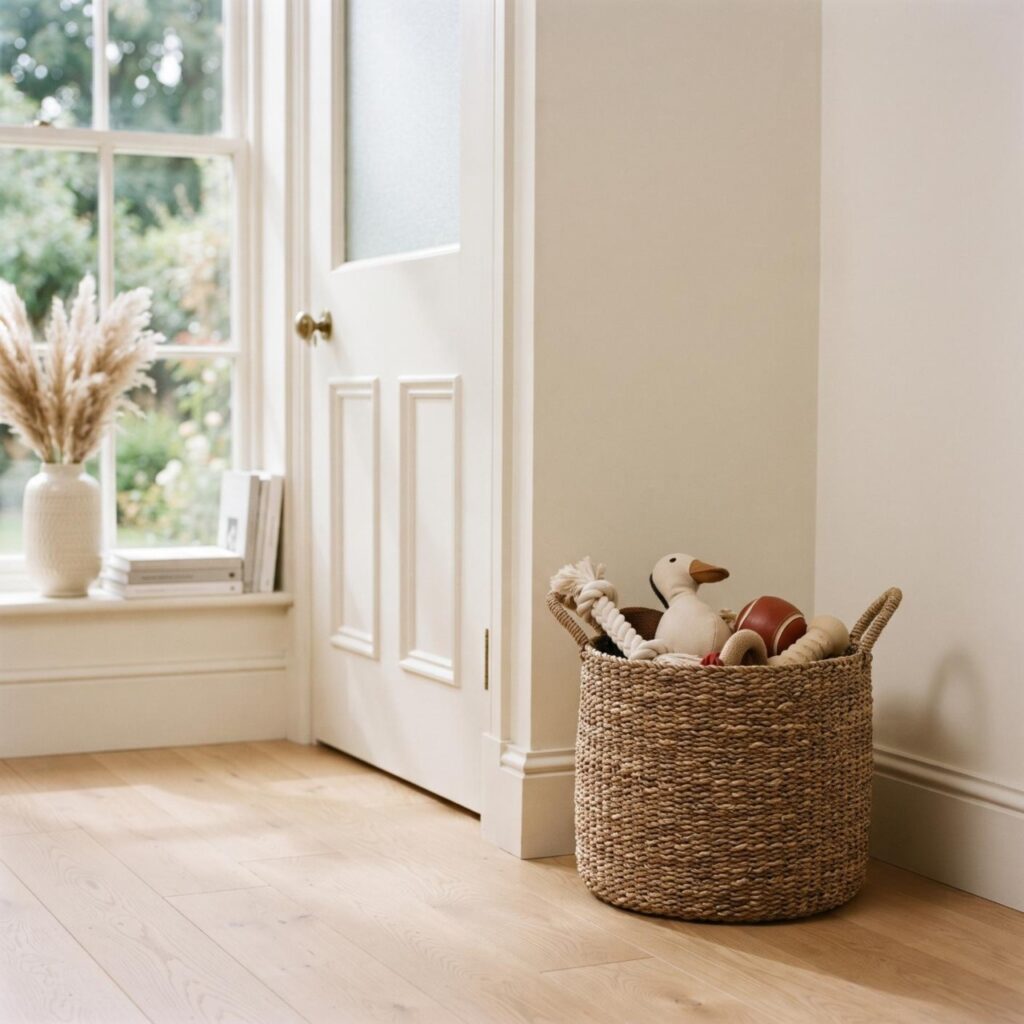
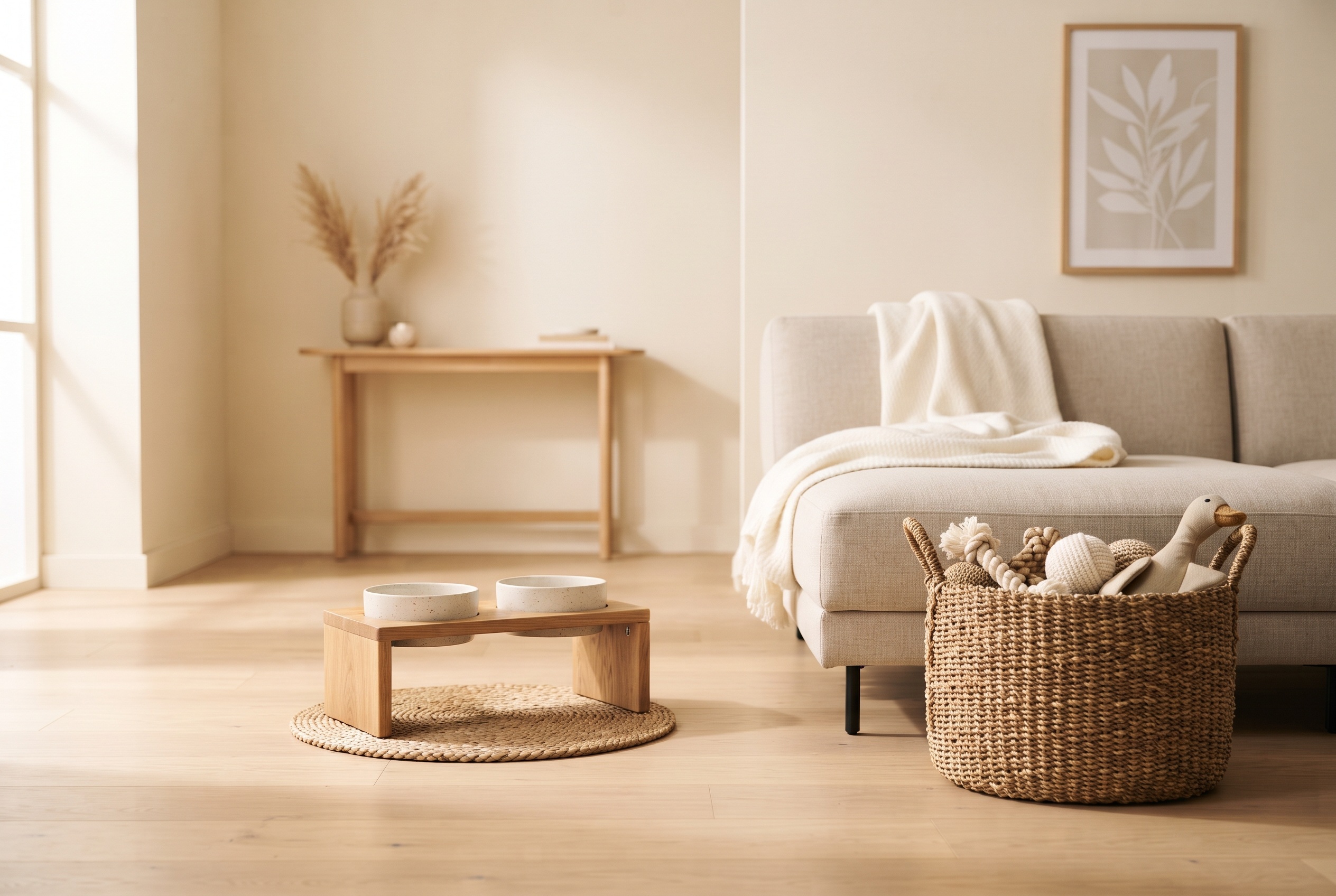
A seagrass or rattan basket with handles reads as storage — the kind of thing you’d own anyway. Put it at the edge of the room where the toys already end up, and the floor stays clear.
Get one taller than you think you need, and with a flat base so it doesn’t tip when a dog goes shoulder-deep looking for a specific toy.
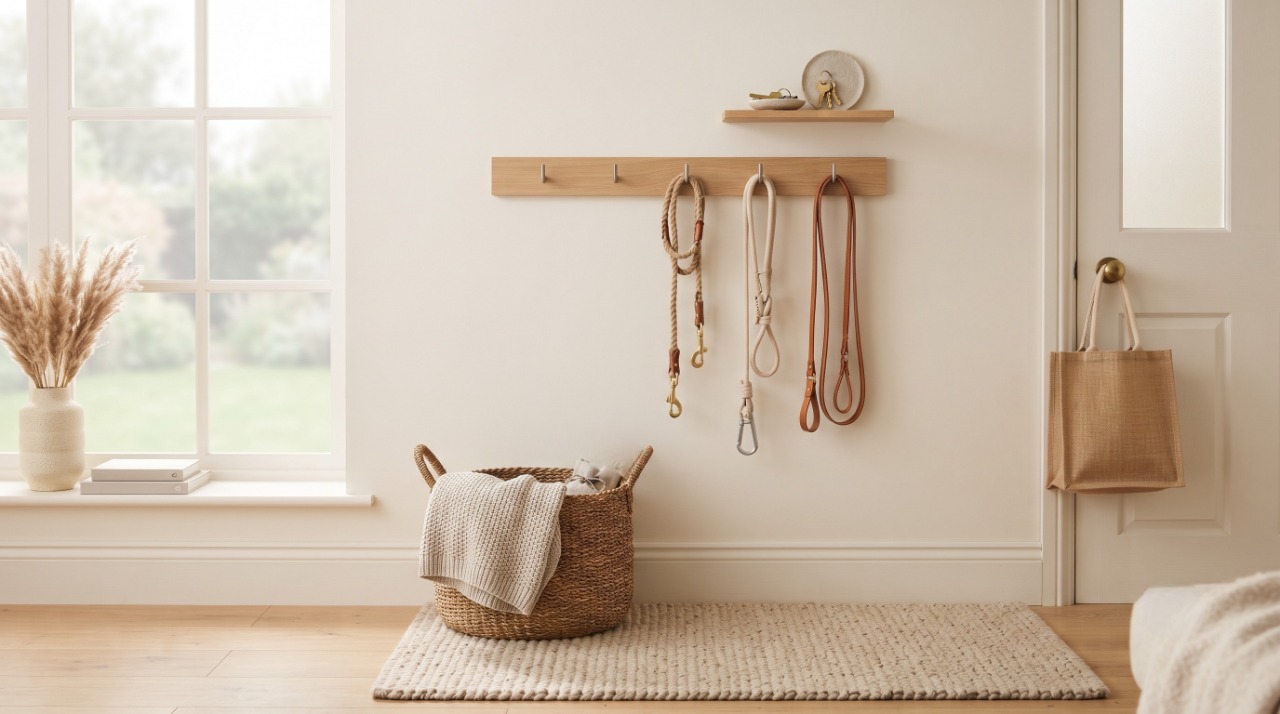
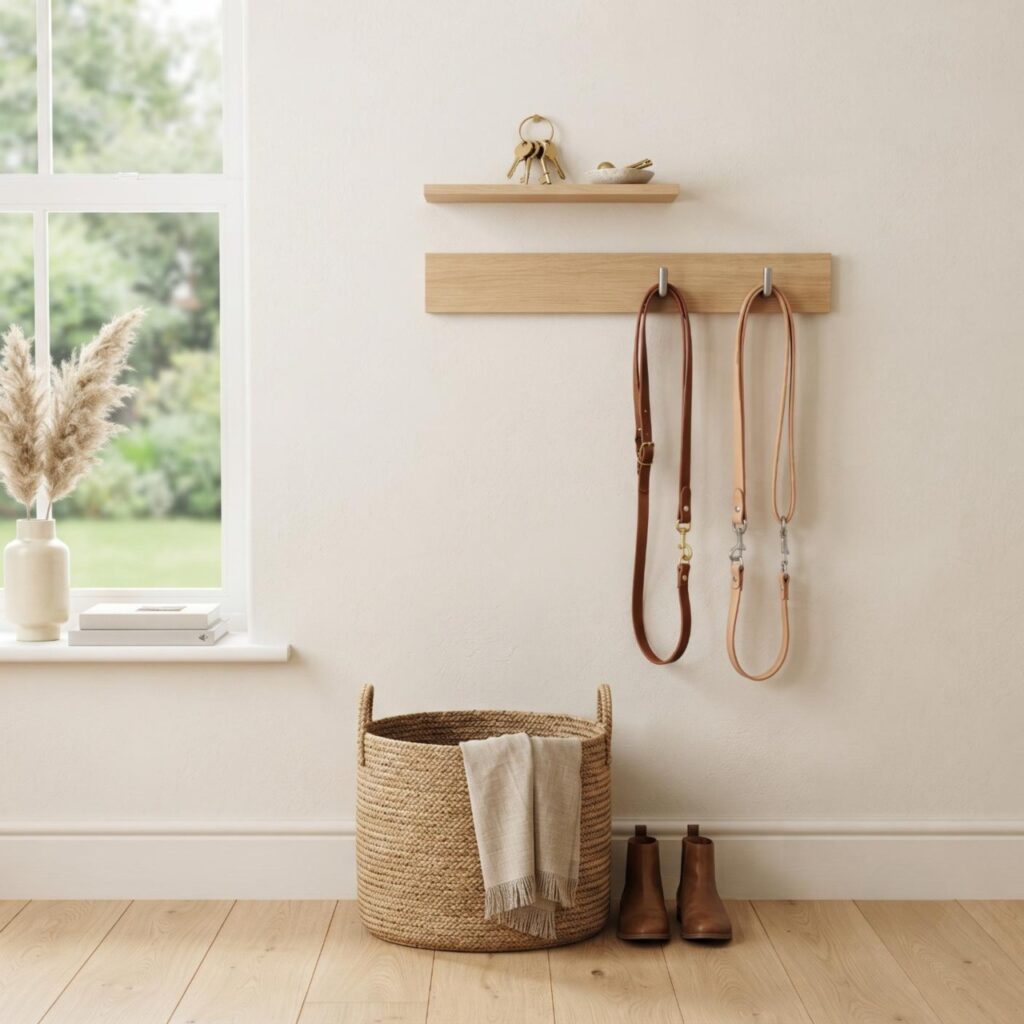
2. A wooden leash holder with a shelf
Leashes hanging on a door handle or draped over a radiator is the default state of most entryways.
A wall-mounted wooden rail with hooks fixes it, and the versions with a small shelf on top absorb the keys, poo bags and torch that otherwise live in coat pockets. Mounted at shoulder height it disappears into the wall in a way a hook on the door never does.
3. An elevated bowl stand

Raised feeders are usually sold on health grounds. Treat those claims carefully — the evidence for raised bowls preventing bloat is genuinely contested, and for some deep-chested breeds it may even be a risk factor. Talk to a vet if that’s your reason.
Where a stand does earn its place is visually and practically: two bowls sunk into a wooden frame stop skidding across the floor, don’t tip, and read as a small piece of furniture rather than two dishes on the tiles.
Check the bowls lift out and are dishwasher safe. Some frames come with bowls that don’t.
4. An airtight food container
The bag of kibble with the top rolled over and a clip on it is doing more damage to your kitchen than you think, and it’s also letting the food go stale.
A sealed container fixes both. Look for one with a proper gasket seal — not just a snap lid — and check the capacity against your usual bag size, because they photograph larger than they are.
Wheels are worth having if you buy the big bags. A full 30 lb container is heavier than it looks.
5. A furniture cover you’d actually leave out
Most sofa covers are the visual equivalent of putting a bin bag over a chair.
The ones worth buying are the fitted quilted kind that look like a throw. They’re washable, they stay put, and — this is the part that matters — you don’t have to whip them off when someone comes round, because they don’t look like a defensive measure.
Buy for your sofa’s measured dimensions, not the label. “Three-seater” varies enormously between manufacturers, and a loose cover looks worse than the hair it’s hiding.
6. A ceramic water fountain
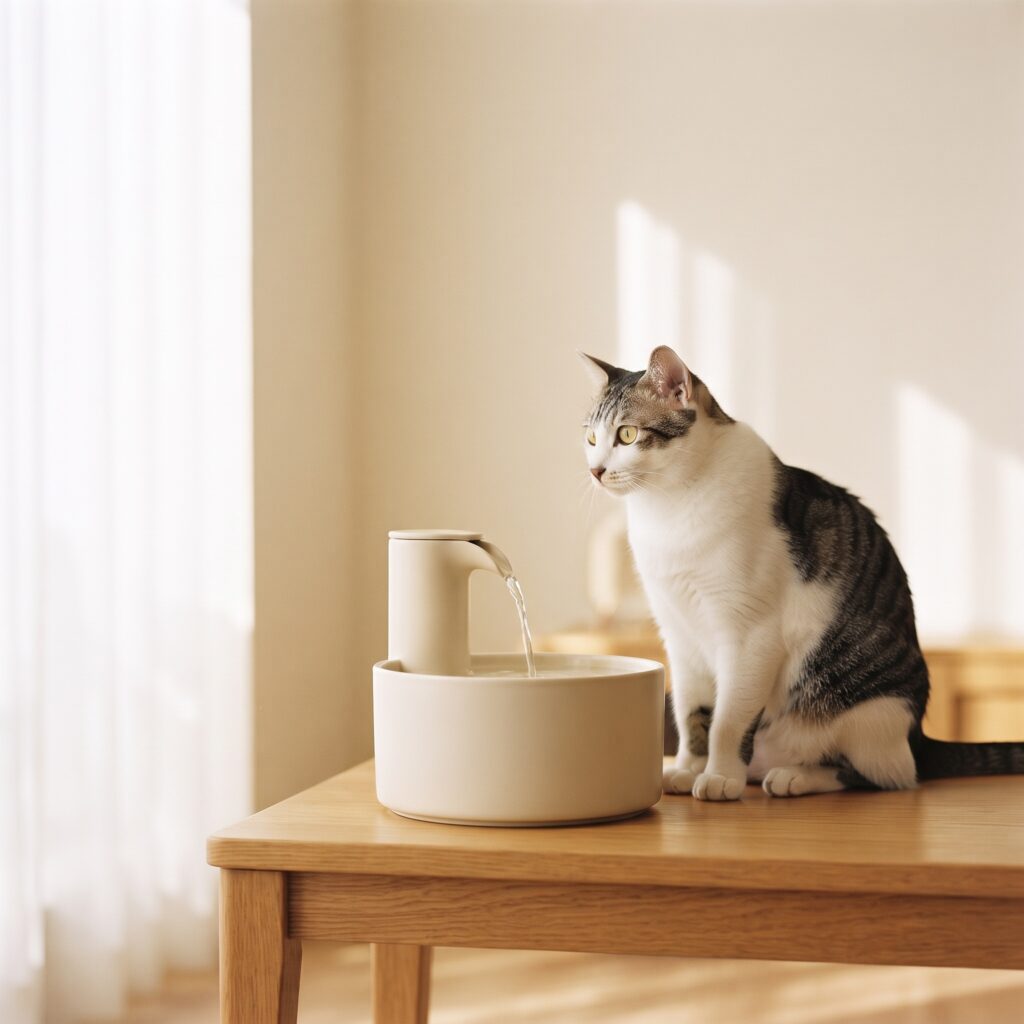
Cats drink more from moving water, which is a real thing and worth knowing if yours is a poor drinker. But the standard fountain is a lump of white plastic with a blue LED, and it hums.
The ceramic versions cost a little more, are considerably quieter, and don’t stain or hold odour the way plastic does over time. From across a room it reads as a bowl.
Whichever you buy, commit to cleaning the pump monthly. A neglected fountain is worse than a plain bowl.
Three things I’d skip
Anything with a paw print on it. The paw print is what turns an object into pet equipment. It’s on almost everything in the pet aisle, and it’s the single easiest thing to avoid.
Matching “collections.” Several brands sell a coordinated bowl, bed, basket and mat set. They look considered in the product shot, but a room with a matching pet set in it reads as a pet room. Mixing means the individual pieces disappear.
Designer beds above about $150. There’s a tier of pet furniture priced like real furniture. Some of it is lovely. But dogs and cats have strong opinions about where they sleep that don’t correlate with price, and a $200 bed that gets ignored in favour of the sofa is an expensive ornament. Start cheap, see where they actually sleep, then upgrade that spot.
Frequently asked questions
Is the nicer version always more expensive? Usually a little, sometimes not at all. Baskets and bowl stands are often the same price or cheaper than the branded plastic equivalent, because you’re buying from homeware rather than the pet category. Fountains and covers do cost more.
My cat only likes the ugly plastic thing. Now what? Then keep the ugly plastic thing. Everything here is about the objects your pet is indifferent to — storage, feeding stations, covers. Where they have a genuine preference, the preference wins. That’s not a compromise, it’s the whole point.
What if I rent and can’t drill? Only the leash holder needs fixings, and heavy-duty adhesive strips handle a leash and harness if you mount it lower than usual. The rest is freestanding.
None of this is about hiding the fact that you have animals. It’s about the difference between a home where a cat lives and a home that has been surrendered to cat equipment — which, when the equipment costs the same either way, is a choice worth making deliberately.
Related reading
- Build a Dog Station in Your Entryway
- 9 Small Space Cat Ideas That Don’t Ruin Your Living Room
- How to Keep a Litter Box From Taking Over Your Home
Disclosure: As an Amazon Associate, I earn from qualifying purchases. Prices shown are approximate and change frequently; check the current price on Amazon.