Disclosure: As an Amazon Associate, I earn from qualifying purchases.
If you live with a shedding dog, you already know the drill. You vacuum on Saturday. By Sunday afternoon the couch looks like it grew a coat. You lint-roll a black shirt for two minutes and still find hair on your shoulder at lunch.
I spent a while working out which tools genuinely solve this and which ones just move hair around. Below are the five that earned a permanent spot in my house, organised by where the problem actually is — plus four popular things I’d skip.
First, why dog hair is so hard to remove
This is worth thirty seconds, because it explains why some tools work and others don’t.
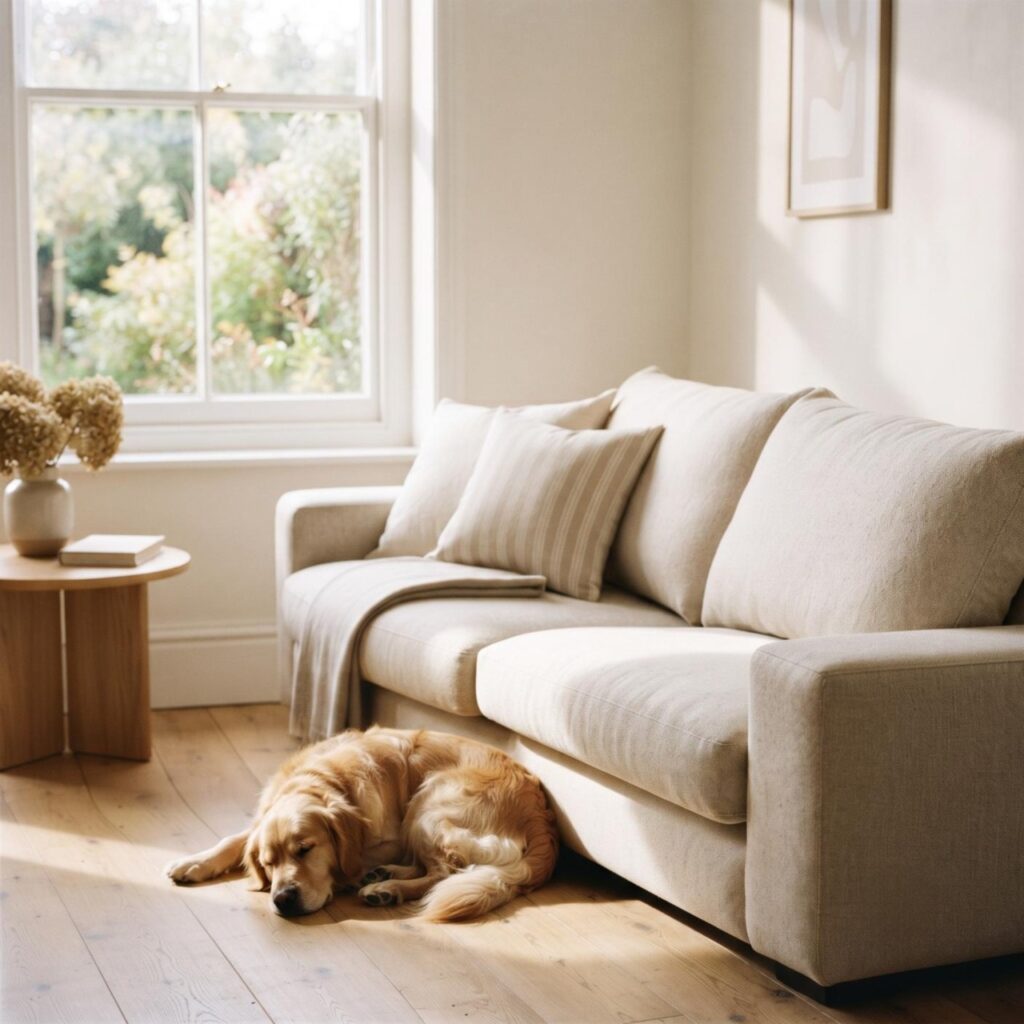
Pet hair doesn’t just sit on fabric. It has a slightly rough, scaled surface, and it carries a static charge. On upholstery and knits, those scales hook into the weave and the static holds them there. That’s why a sticky lint sheet lifts the loose surface hair and leaves the embedded hair completely untouched.
Anything that actually works does one of three things:
- Uses static against itself — rubber and silicone generate an opposing charge that pulls hair up out of the weave.
- Physically rakes it out — a stiff edge drags embedded hair to the surface where it can be collected.
- Stops it landing there in the first place — either by removing loose undercoat from the dog, or by putting a washable layer between the dog and your furniture.
Almost every product below is one of those three. If a product isn’t, be sceptical.
1. A reusable roller (for clothes and quick jobs)
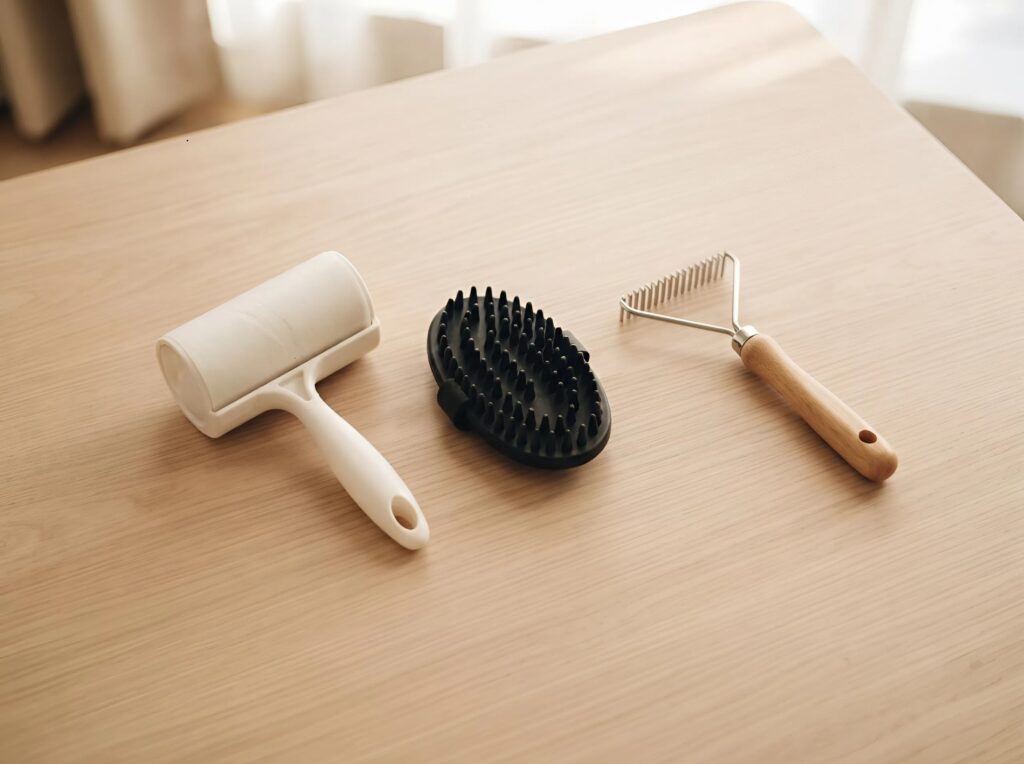
The first upgrade to make is dropping disposable sticky sheets. A reusable roller uses a textured surface instead of adhesive, so it lifts hair the sheets slide over — and you empty it into the bin instead of buying refills forever.
Best for: clothes, car seats, bedding, and the thirty seconds before you leave the house.
Worth knowing: it works in one direction. Roll it back and forth like a paint roller and you’ll undo half your work. One direction, then empty.
2. A rubber-edged hair remover (for the couch and carpet)
This is the one that surprises people. It’s a simple tool with a stiff rubber or silicone edge, and you drag it across upholstery in short strokes. The hair comes up in visible grey ropes — hair your vacuum had been driving over for months.
Best for: sofas, armchairs, car upholstery, and rugs.
Worth knowing: it takes real effort, and on a large sofa it’s a ten-minute job, not a two-minute one. It’s also strangely satisfying, which is probably why it’s the tool in my house that actually gets used.
3. A deshedding brush (fix the source)
Every tool above is cleanup. This one is prevention, and it changes the problem more than the other five combined.
Most shedding is loose undercoat that hasn’t fallen out yet. Ten minutes of brushing outside removes hair that would otherwise spend the next week landing on your furniture. Do it twice a week during a shedding season and the difference is not subtle.
Best for: double-coated breeds — Huskies, Golden Retrievers, German Shepherds, Corgis.
Worth knowing: don’t over-brush the same spot. Deshedding tools reach the undercoat, and repeated passes over one area can irritate the skin. Short sessions, whole dog, then stop.
4. A rubber broom (for hard floors and low-pile rugs)
On hardwood and tile, hair doesn’t stick — it drifts. A normal broom pushes it into the air and it lands somewhere else. A rubber broom gathers it into a clump you can actually pick up, and the same tool works on low-pile rugs where a vacuum tends to skim over.
Best for: hardwood, tile, laminate, entryway rugs.
Worth knowing: mist the floor lightly with water first. Damp hair clumps instead of scattering, and the difference is significant.
5. A washable furniture cover (for the sofa you’ve given up on)
If your dog is on the couch and that isn’t changing, stop fighting the fabric and put a layer over it. A fitted, washable cover means the weekly job becomes a wash cycle instead of an hour of scraping. There are a few more of these — pet things that don’t look like pet things — in this round-up.
Best for: rented flats, light-coloured sofas, and dogs who have already won the argument about the couch.
Worth knowing: buy for your sofa’s actual measurements, not its description. “Three-seater” means different things to different manufacturers, and a loose cover slides around and looks worse than the hair did.
Four things I’d skip
Laundry hair-catchers. These are the rubber discs you throw in the washing machine, and they are everywhere in articles like this one. I left them out after looking at the numbers: the category leader has over 61,000 reviews and an average of 3.5 stars, and every alternative I could find was either rated similarly or had almost no reviews at all. Sixty thousand people at three and a half stars is not ambiguous. Wash pet-covered items separately and run an empty rinse cycle afterwards instead — it costs nothing and it works.
Disposable lint rollers. Fine for a suit jacket on the way out the door. On upholstery they lift the top layer and leave everything embedded, and the refill cost adds up faster than you’d think.
Rubber gloves as a hair tool. They do work — the technique is real, and a damp rubber glove will pull hair off a cushion. But it’s slow, and a purpose-made rubber tool does the same job in a third of the time. Use it if you already have gloves; don’t buy gloves for this.
Robot vacuums, as a hair solution specifically. They’re genuinely useful for daily maintenance on hard floors. But long hair wraps around the brush roll, and with a heavy shedder you’ll spend more time cutting hair off the roller than you save. It’s a floor tool, not a hair tool.
Frequently asked questions
Does fabric softener actually help with pet hair? Somewhat, and the reason is static. Softener and dryer sheets reduce the static charge that holds hair to fabric, so more of it releases into the lint trap. It’s a useful supporting habit, not a solution on its own.
Should I vacuum before or after using a rubber hair tool? After. The rubber tool pulls embedded hair up to the surface; vacuuming then picks it up. Do it the other way round and the vacuum drives over the hair that matters.
How often should I brush a heavy shedder? Twice a week normally, and daily during a seasonal blow-out — typically spring and autumn for double-coated breeds. Short sessions beat long ones.
Nothing here removes dog hair permanently, and any product promising that is lying to you. But the combination of one prevention tool and two cleanup tools moves this from a constant background irritation to a ten-minute weekly job — which, when you look at the dog, is a trade most of us would take.
Related reading
- 12 Pet Products That Actually Look Good in Your Home
- Build a Dog Station in Your Entryway
- The New Dog Checklist: What You Actually Need in Month One
Disclosure: As an Amazon Associate, I earn from qualifying purchases. Prices shown are approximate and change frequently; check the current price on Amazon.